In This Article
Commercial roofing is a completely different discipline from residential roofing. Flat or low-slope roofs require different materials, installation techniques, and maintenance approaches. If you own a commercial property in Maryland or Delaware, here's what you need to know.
Flat vs. Steep-Slope: Why It Matters
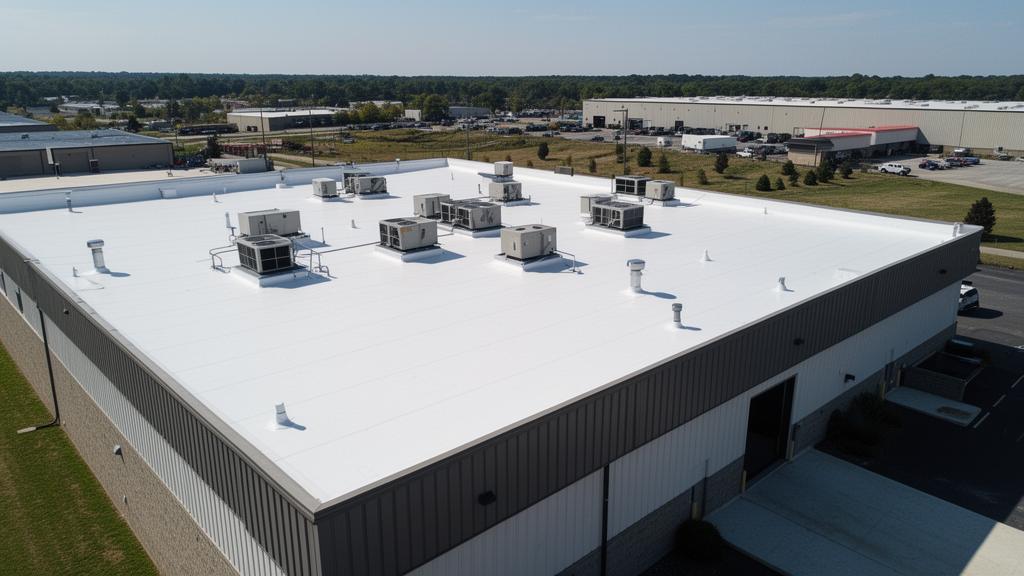
Residential roofs are steep enough for water to run off quickly, so overlapping shingles work well. Commercial buildings typically have flat or near-flat roofs where water pools — requiring continuous membrane systems that create a watertight seal across the entire surface.
TPO (Thermoplastic Polyolefin)
TPO is the most popular commercial roofing membrane today. It's a single-ply white membrane that reflects solar heat (reducing cooling costs by 15-30%), is resistant to UV rays, chemicals, and punctures, and seams are heat-welded for superior waterproofing. TPO typically lasts 20-30 years and costs $5-$8 per square foot installed.
EPDM (Rubber Roofing)
EPDM is a synthetic rubber membrane that has been used commercially for over 50 years. It's extremely durable, flexible in cold temperatures (important for Maryland winters), and cost-effective at $4-$7 per square foot. The main drawback is its black color, which absorbs heat — though white-coated versions are available.
Modified Bitumen
Modified bitumen uses asphalt-based rolled sheets, often with a granulated surface. It provides excellent waterproofing and handles foot traffic well (important for roofs with HVAC units). It's typically installed in multiple layers for redundancy. Modified bitumen costs $4-$8 per square foot and lasts 20-30 years.
Maintenance Is Non-Negotiable
Commercial flat roofs require semi-annual inspections, especially after storms. Key maintenance tasks include: clearing drains and scuppers (standing water is the #1 enemy), inspecting seams and flashings, checking for punctures from foot traffic or debris, and ensuring HVAC equipment is properly supported to prevent membrane compression.
Choosing a Commercial Roofing Contractor
Commercial roofing requires specialized expertise. Look for a contractor with commercial-specific certifications (manufacturer-authorized for TPO or EPDM systems), documented commercial project experience, proper commercial insurance coverage, and the ability to work around your business operations with minimal disruption.